Large Beech Tree Removal and Decay Inspection in Maidenhead
We were recently called out to inspect a large mature Beech tree in Maidenhead after the tree had dropped a substantial limb, leaving the owner concerned about the possibility of further branch failures onto neighbouring property or, even worse, near their children while using the garden.
The current owners explained that tree works had been carried out before they moved into the property, so they were unaware of what pruning had previously taken place or who had carried out the work.
Following a detailed ground inspection, we identified extensive decay within the main stem, deadwood and dieback throughout the canopy, along with significant structural defects caused by poor historic pruning works carried out many years earlier. Due to the amount of internal growth that had previously been removed, the tree no longer had enough suitable growth points to allow for a safe or sustainable reduction. Unfortunately, removal of the tree was the only safe long-term option.
Once we gained access into the canopy, additional defects became apparent, including sun scorch damage on exposed upper limbs, squirrel damage, cavities throughout the structure, and further evidence of internal decay.
Using specialised rigging equipment and rope lowering techniques, we carefully dismantled the Beech tree in sections to safely lower branches and timber to the ground while minimising damage to the lawn and reducing risk to the surrounding property.
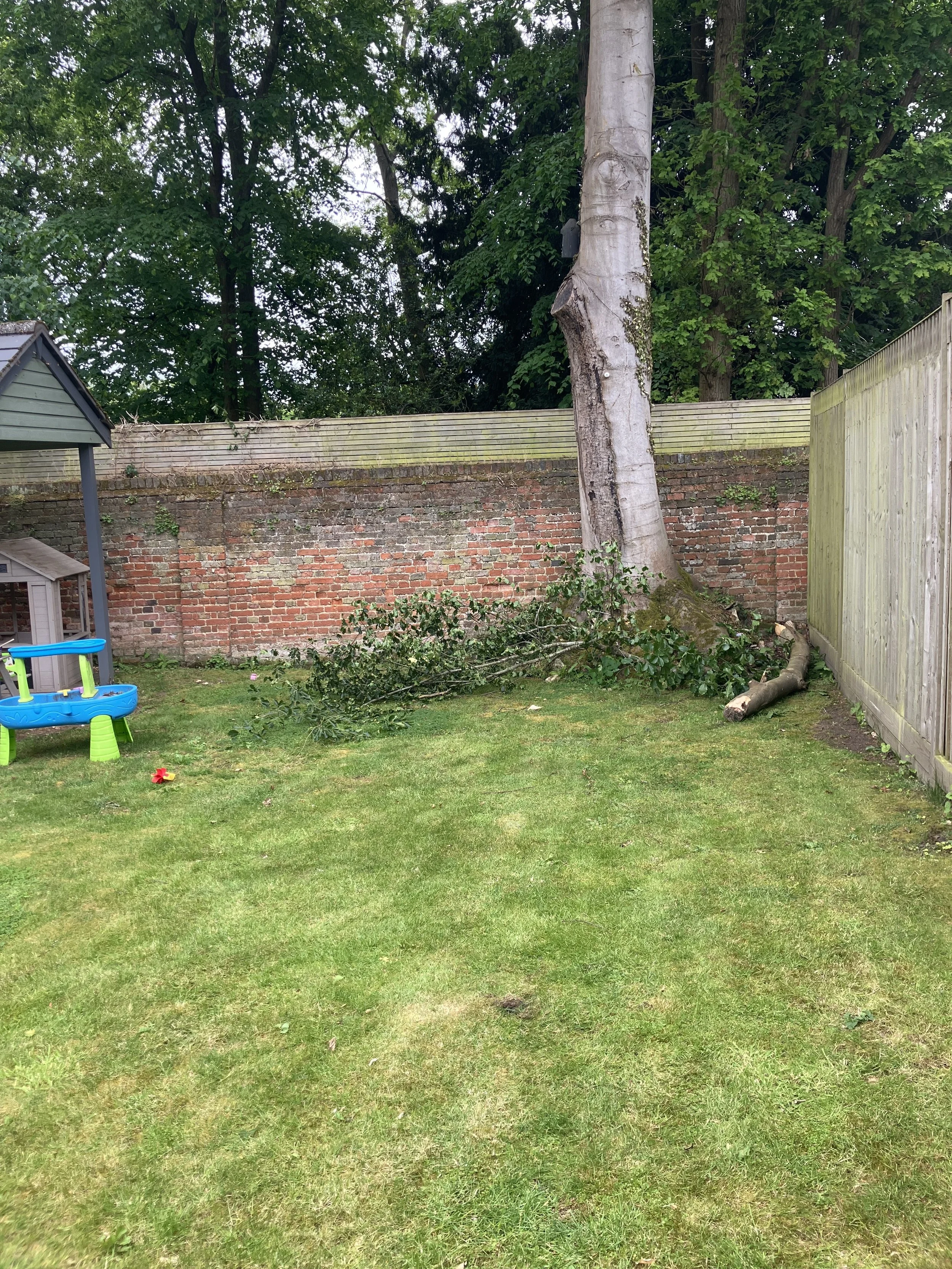
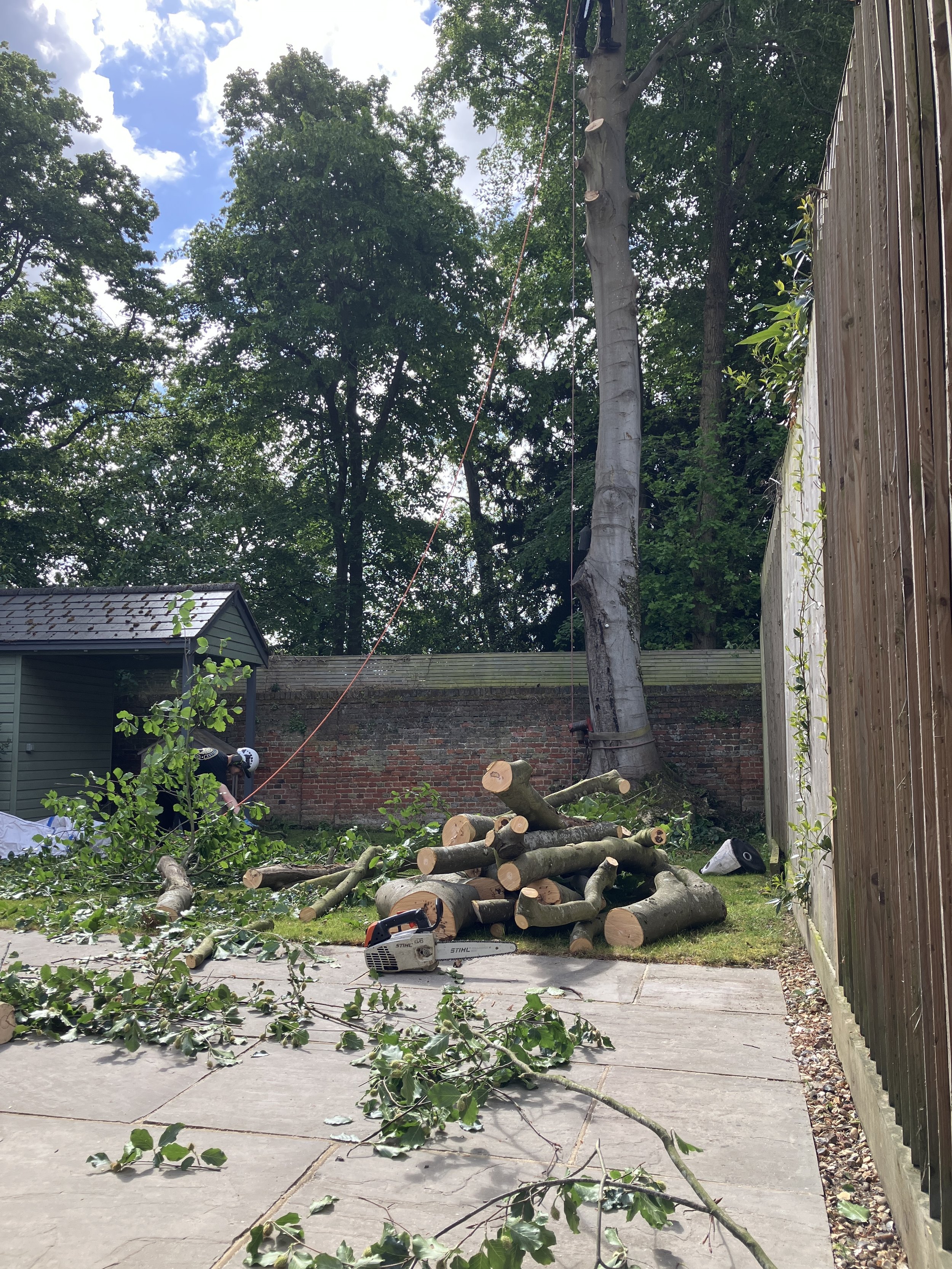
Evidence of Internal Decay Within the Tree
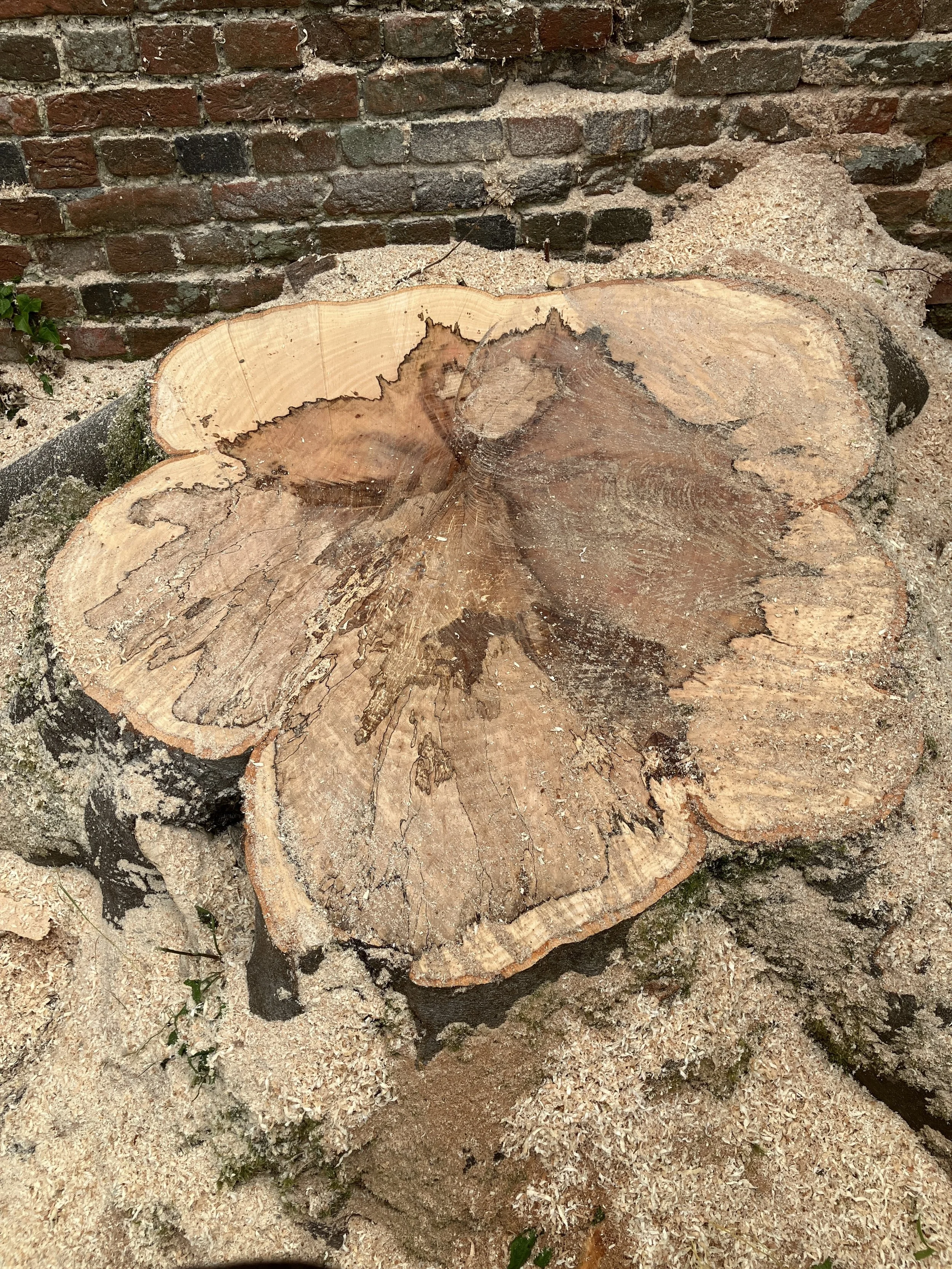
Once the tree had been dismantled, the extent of the internal decay became much more visible within the stump cross-section.
The darker discoloured sections visible throughout the centre of the stump are signs of advanced internal decay and deadwood within the tree. Decay like this weakens the structural integrity of the stem over time, particularly in mature Beech trees, increasing the likelihood of limb or stem failure during periods of strong wind or heavy loading.
In this case, the decay appeared to be associated with historic pruning wounds and long-term structural stress. Large pruning cuts carried out many years earlier can allow moisture, fungi, and decay organisms to enter the tree, gradually breaking down the internal wood while the outer parts of the tree may still appear alive and healthy externally.
This is why regular tree inspections and correct pruning practices are so important, especially for large mature trees located near homes, gardens, roads, or neighbouring properties. Early identification of defects can often allow for management pruning and monitoring before removal becomes necessary.
At Elementree Care, we always aim to provide honest advice based on the long-term safety, health, and structural condition of the tree. While tree preservation is always preferred where possible, safety must remain the priority when extensive decay and structural failure are present.
Why do Beech trees fail?
Beech trees can become vulnerable to structural failure when affected by decay, poor historic pruning, storm damage, or long-term internal defects that weaken the wood over time.
Can incorrect pruning damage a tree long term?
Yes. Excessive or poorly carried out pruning can weaken a tree’s structure, expose limbs to decay, encourage weak regrowth, and significantly increase the risk of future branch failure.
Why was the tree removed instead of reduced?
Due to the extensive internal decay and lack of suitable growth points within the canopy, the tree could not be safely reduced without increasing the likelihood of future structural failure.